
Patient Resources
Good questions. Clearer next steps.
-
Care Conversations, Trials and Appointment Planning
Ask About Navigation
For Patients and Families
Prepare for the conversation that comes next.
Exploring specialist care, a second opinion or a clinical trial can bring a lot of questions. These practical guides help you organize them and prepare for a conversation with your care team.
Use them alongside your clinicians’ advice. Information here supports planning; it does not determine which treatment or study is right for you.
You do not need every answer before you ask your next question.
Prepare Your Questions
Keep Next Steps Together
Three Places to Begin
Make your next conversation more useful.
Care and Second Opinions
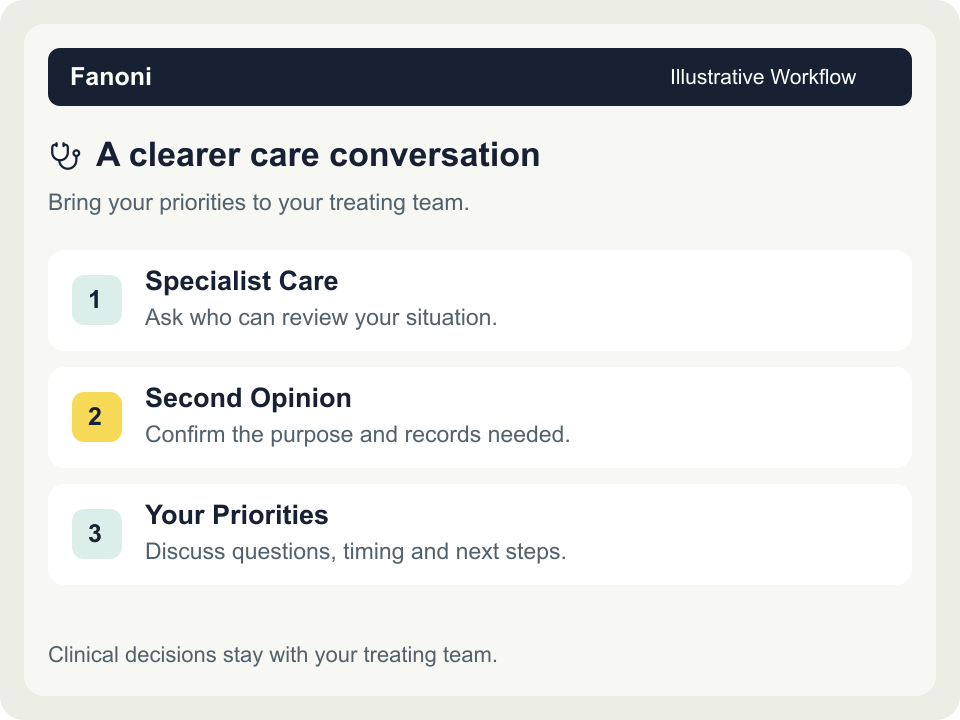
Prepare questions about your diagnosis, available care options and the purpose of a specialist review. Ask what records, referrals or permissions a provider needs before requesting a visit.
Understanding Trial Information
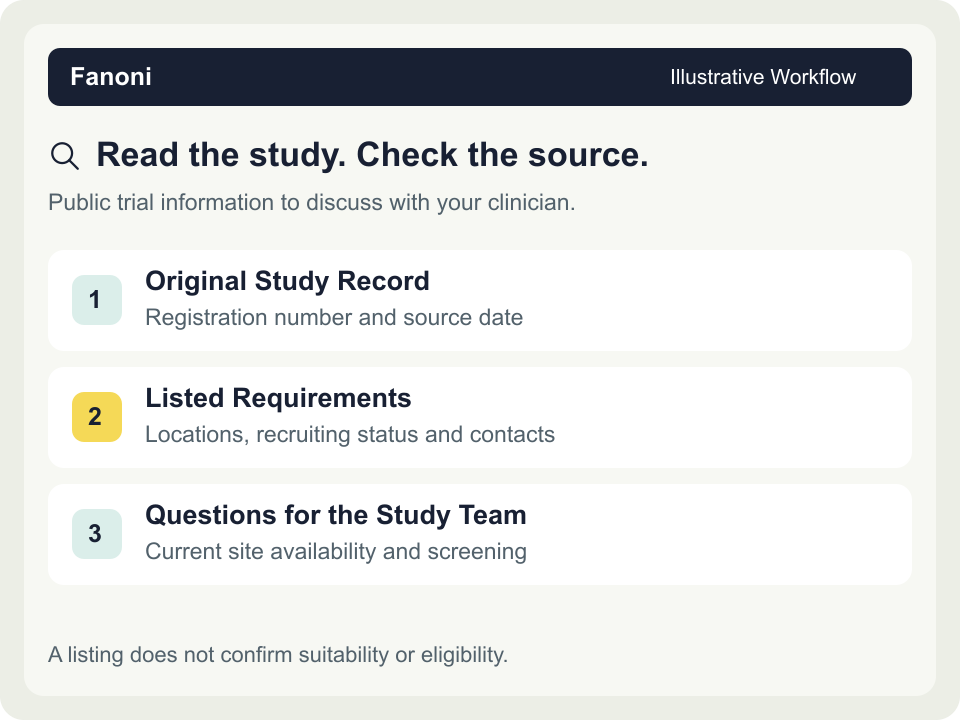
Keep the study title, registration number and original source. Note the listed requirements, location, recruiting status and contact. Ask your clinician and the study team what the information means for your situation.
Appointments and Follow-Up
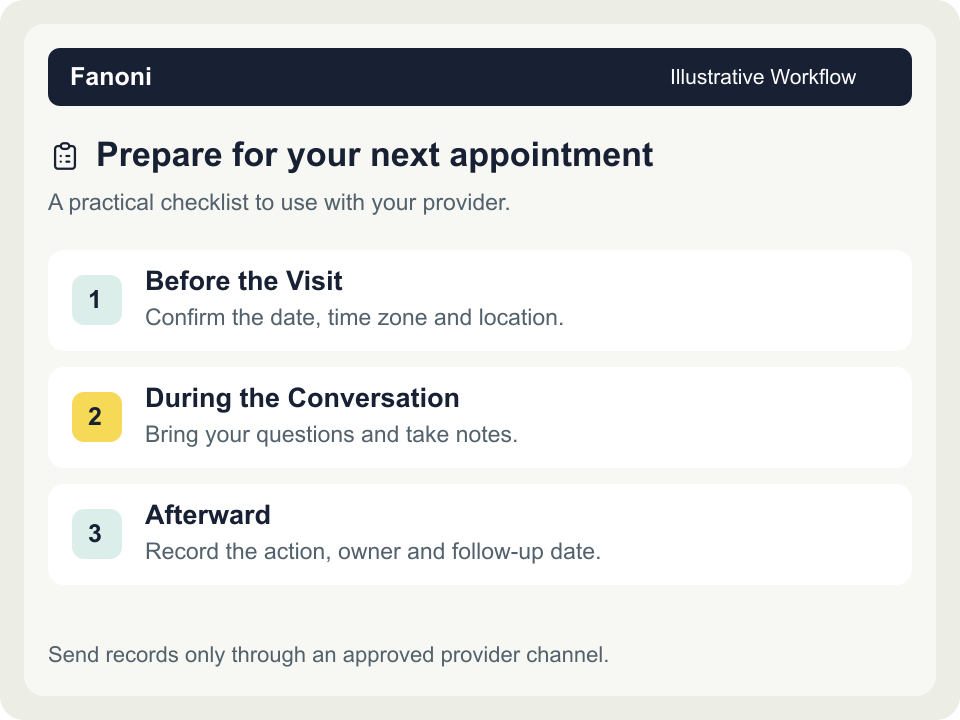
Check the date, time zone, location and named contact. Ask how to prepare and what happens afterward. Keep track of confirmations, questions still open and who will contact whom.
Need help organizing the practical steps?
Ask Fanoni about available administrative support with clinic calls, appointment requests, reminders, rescheduling and follow-up. We first agree the scope, contact permissions and any fees.
An inquiry is the starting point. Every appointment needs provider confirmation. Do not email or upload patient records through this website.
Explore Information
Prepare Questions
Agree Next Steps
Stay Organized
Practical Guides for Your Next Step
How can I prepare for a care conversation?
- Write down your main questions and what matters most to you.
- Ask your care team to explain your diagnosis, the options being considered and the next decision.
- Ask about the expected benefits, risks, alternatives and timing.
- Bring a trusted person if you want support, and ask how to get a written summary.
What should I ask before a second opinion?
- Which specialist should review my situation, and what question should the review answer?
- Do I need a referral, and which records or tests does the provider require?
- Is the visit remote or in person, and who confirms the appointment?
- What will it cost, and how will the opinion reach my usual care team?
Send records only through the provider’s approved channel.
What should I check in a clinical trial listing?
- Save the study title, registration number, original source and date you checked it.
- Review the listed recruiting status, requirements, locations and contacts.
- Ask the study team whether the relevant site is still accepting inquiries.
- Discuss clinical suitability with your clinician. The research team confirms eligibility through screening.
Read ClinicalTrials.gov’s Common Questions for more background.
What questions should I ask a research team?
- What is the study testing, and what are the possible risks and benefits?
- What screening, visits and procedures are involved?
- Who explains consent and answers questions before I decide?
- What happens if I choose to leave, and who coordinates with my usual clinician?
A search result is information to discuss, not an offer of treatment or a confirmed place in a study.
What should I confirm before travel or payment?
- Confirm the provider or study site will see you before making travel arrangements.
- Ask for written details of costs, coverage, deposits and cancellation terms.
- Check travel, accommodation, language support and follow-up arrangements.
- Ask your clinician whether travel is appropriate for you.
For cancer trial costs, see the National Cancer Institute’s Who Pays for Clinical Trials? Coverage and access need confirmation for your location and situation.
How can I keep appointments and follow-up organized?
- Record the confirmed date, time zone, address or visit link and contact person.
- Ask the provider about preparation, accessibility and interpreter needs.
- Keep a list of questions for the visit.
- Afterward, note the agreed actions, responsible person and expected follow-up date.
- If plans change, contact the provider to confirm rescheduling.
How do I ask Fanoni for practical support?
Begin with a general care-navigation inquiry. Ask which support is available and how responsibilities, permissions and any fees would work. Do not email or upload patient records through this website. Fanoni’s public research app does not book appointments; providers and study teams confirm the next steps within their services.
Which guide fits my next decision?
Use the specialist guide to prepare a review, the trial guide to check a study listing, or the appointment guide to organize confirmations and follow-up. These guides support planning with your clinician.
Sources and Further Reading
- NIH: How To Prepare for a Doctor’s Appointment
- ClinicalTrials.gov: Study Basics
- NCI: Who Pays for Cancer Clinical Trials?
These sources provide background. They do not endorse Fanoni or confirm access to a provider or study.
Take One Step at a Time
Start with a question you want answered.
Bring these questions to your care team, explore public trial information in Fanoni Care, or ask about practical navigation support. You can start a general inquiry without sending medical records.