
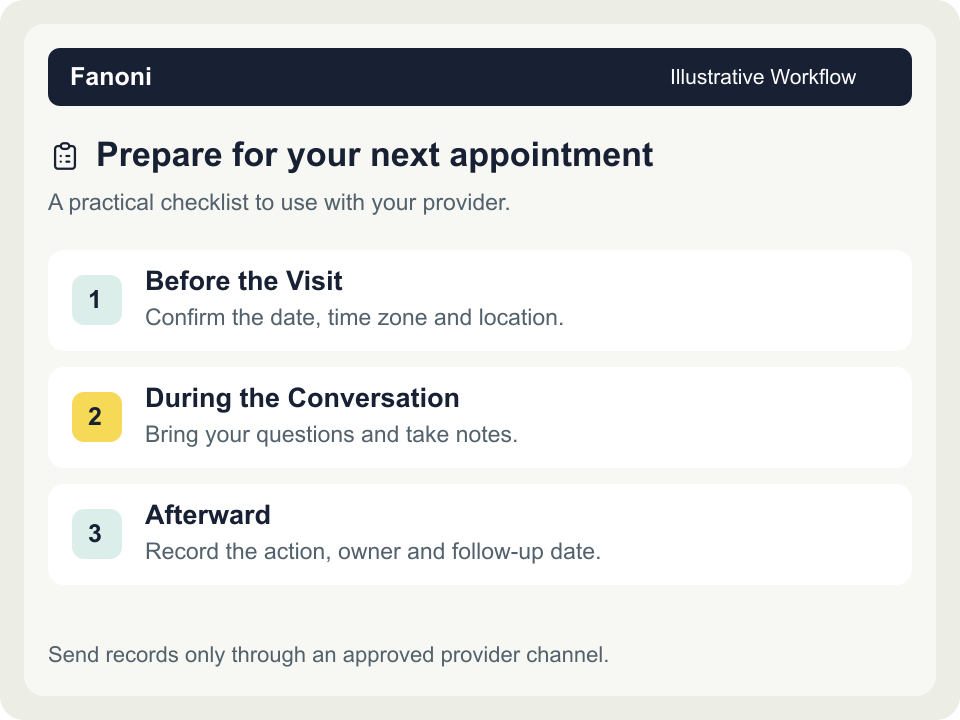
Appointments often involve several practical steps before and after the visit. Keeping the details in one place can help you see what is confirmed, what is still open and who is responsible for the next action.
Keep a confirmation checklist
- Confirmed date, time and time zone
- Address, department or remote-visit link
- The provider’s contact person and phone number
- Referral, payment or coverage requirements
- Preparation instructions supplied by the provider
An appointment request is not a confirmed booking. Ask the provider to confirm the arrangements, including any accessibility or interpreter needs.
Prepare for the conversation
Write down the questions you want answered and bring a trusted person if you would like support. Ask your provider which documents are needed and use its approved channel to share them.
Record the next steps
After the visit, keep a short list with three columns: the agreed action, the responsible person and the expected follow-up date. Ask who to contact if an administrative update does not arrive.
- What has been agreed?
- Who will arrange the next appointment or send the summary?
- When should I expect an update?
- How should changes or rescheduling be confirmed?
Ask about practical support
Fanoni’s goal includes support with clinic calls, appointment requests, reminders, rescheduling and administrative follow-up. Ask about available navigation support; the scope, contact permissions and any fees must be agreed first. Providers confirm appointments and clinicians remain responsible for medical follow-up.
Find more checklists in Patient Resources. Keep initial inquiries general and do not email or upload patient records through this website.
Sources and Further Reading
These sources provide background. They do not endorse Fanoni or confirm access to a provider or study.
Published by Fanoni · Published · Updated . Planning information, not a clinical assessment.