
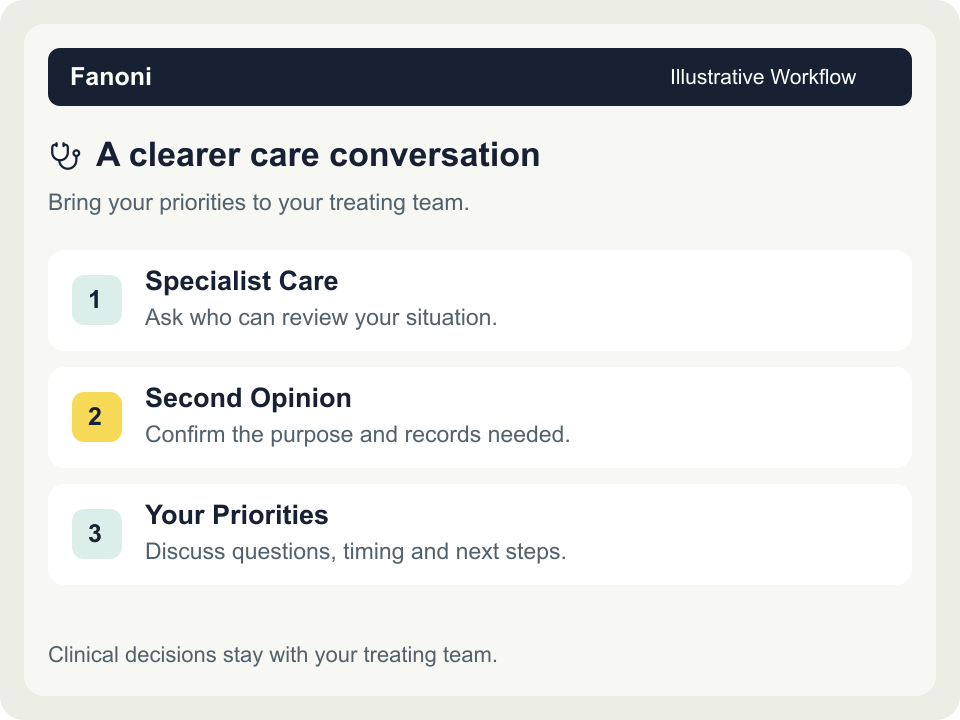
A specialist visit or a second opinion starts with a question you want answered. Preparing that question can help you and your care team make the most of the conversation, whether the provider is nearby or abroad.
Decide what you want to understand
Write down your priorities before requesting a visit. You might want a clearer explanation of your diagnosis, a review of the options your team has discussed or an opinion from a clinician with relevant expertise.
- What question should the specialist review answer?
- Which type of specialist does my treating team suggest?
- How will the review fit into my current care?
Ask the provider what it needs
Before sending information or paying for a visit, ask the provider to confirm its process. A listing or an inquiry does not confirm that a clinician will accept your request.
- Do I need a referral?
- Which records, reports or test results are needed?
- Is the review remote or in person?
- What are the fees, payment arrangements and cancellation terms?
- Who confirms the appointment and answers administrative questions?
Send records only through the provider’s approved channel. Do not email or upload patient records through this website.
Plan how the opinion returns to your care team
Ask whether you will receive a written summary, who sends it to your usual clinician and how follow-up questions are handled. If travel is involved, confirm access and appointment details first, and discuss travel suitability with your clinician.
Take a practical next step
Use Fanoni’s patient resources to prepare questions. You can also read about care-navigation support and ask what is available. Coordination scope, permissions and any fees must be agreed before work begins.
This is a planning guide. Your treating team remains responsible for clinical decisions, and the provider confirms access and appointments.
Sources and Further Reading
These sources provide background. They do not endorse Fanoni or confirm access to a provider or study.
Published by Fanoni · Published · Updated . Planning information, not a clinical assessment.